Refrigerated Food Vending Machine Financing
A refrigerated food vending machine holds a product with an expiration date printed on the wrapper, not a bag of chips that can sit on a shelf for months. Sandwiches, salads, dairy cups, and prepared entrees all need the cabinet to hold a temperature most health departments treat as a hard ceiling, commonly cited around 41 degrees Fahrenheit, and most machines in this category use a digital time-and-temperature lock that blocks a sale automatically once a product has been sitting past its window. That locking logic is one of the first things we ask about on a quote, because it tells us whether the machine can be trusted to protect the buyer from a spoilage complaint after it leaves our review.
Single refrigerated food machines are priced high enough that one unit can sometimes approach our program minimum, but the stronger files usually combine two or three cabinets, a delivery vehicle or route addition, and the first weeks of a replenishment contract with a food supplier. We ask early who is delivering fresh product, how often, and whether that supplier is separate from the equipment seller, because financing a machine that has no confirmed source of rotating inventory is a different conversation than financing one tied to a running supply agreement.
What has to be true before a refrigerated food package qualifies
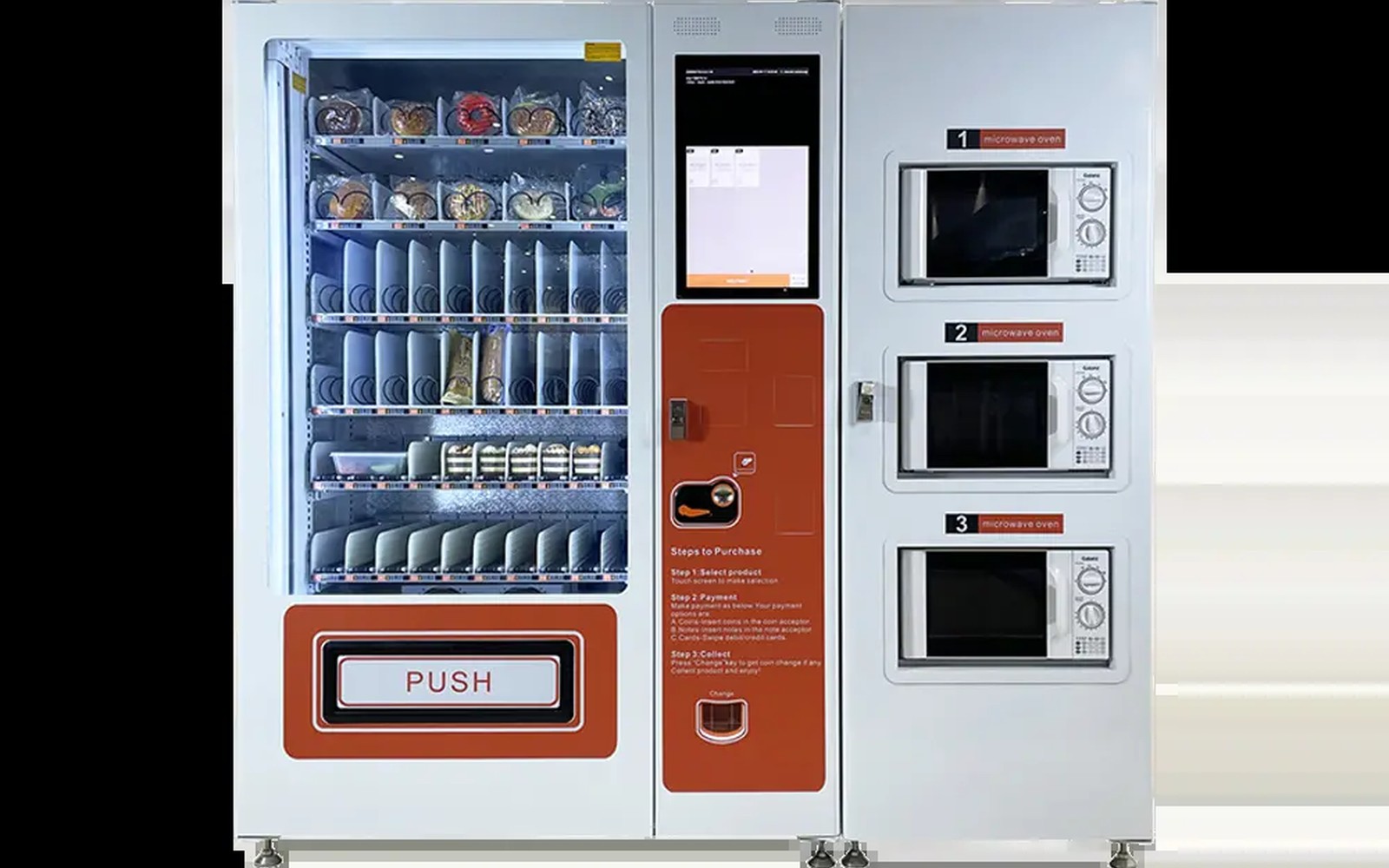
The equipment itself needs to be described past the word refrigerated. We want to know whether the cabinet uses a glass merchandiser front where customers see the product directly, or a solid door with a digital display and keypad selection, since the two designs have different service histories and different resale markets. We also ask about the compressor and evaporator setup, because a unit that struggles to hold temperature in a warm mechanical room or an uninsulated garage is a liability regardless of how new the cabinet looks.
Replenishment logistics matter as much as the machine. A buyer placing one cabinet in a single office break room manages restocking differently than an operator running six machines across three hospital campuses, where product has to move through a commissary or supplier on a tight rotation before shelf life runs out. We ask for a restocking plan, even an informal one, describing who delivers, how often, and how expired product gets pulled, because a machine that cannot be kept in rotation stops earning regardless of how the purchase was financed.
Compressor condition, door style, and rotation risk on a used purchase
Used refrigerated food machines carry more inspection weight than a used snack cabinet because a refrigeration failure does not just mean a broken machine, it means spoiled product and a possible health complaint at the site. We ask sellers for the age of the compressor, whether the unit has a defrost cycle log or service history, and whether the digital lock and temperature sensor have been tested recently. A private-party purchase from an operator exiting the category needs the same bill of sale and serial number documentation we would require for any Private-Party Vending Machine Financing request, along with a description of how the machine performed at its prior site.
Door style affects more than appearance. A glass-front cabinet lets customers see the product but also shows spoilage or poor rotation immediately, which can hurt a location's reputation faster than a solid-door unit would. Some operators pair a refrigerated food cabinet with a companion machine covering a different temperature band, such as a Frozen Food Vending Machine Financing unit for ice cream or frozen entrees, or a Hot Food Vending Machine Financing unit that reheats a refrigerated item on demand, and we review those purchases together when they are quoted from the same seller and installed at the same site.
Documents that move a cold-food file to funding
Send the itemized seller quote first, with each cabinet priced separately from delivery, installation, and any digital lock or telemetry subscription the manufacturer charges for remote temperature alerts. A single combined number covering several machines without a breakdown is the most common reason a file stalls, since we cannot tell what is collateral and what is a recurring service fee. New equipment purchased through a dealer typically moves fastest because the equipment package already separates those lines.
A straightforward single-cabinet purchase with clean credit can often move on Application-Only Vending Financing using just the credit application and vendor quote. A multi-unit rollout across several buildings, or a request from a business with credit outside the top tier, usually needs three months of bank statements so the full replenishment and staffing picture, not just the equipment price, is part of the review. We would rather ask for a supplier contract or delivery schedule upfront than approve a machine that has no confirmed way to stay stocked.
Where cold food vending actually earns its keep
Hospitals and Healthcare Facilities are one of the strongest placements for this category, since staff and visitors need food options at hours the cafeteria is closed, and a refrigerated cabinet stocked with sandwiches and salads covers that gap without adding kitchen labor. Manufacturing Plants running a night shift see similar demand, particularly at facilities without an on-site cafeteria or a break room within walking distance of the line.
Warehouses, distribution centers, and other round-the-clock operations follow the same logic: workers on a shift that ends after nearby restaurants close need something more substantial than a candy bar, and a well-run refrigerated food route can become one of the more reliable lines in an operator's fleet. Buyers evaluating a unit like Fastcorp FRI-Z400 Financing for this kind of placement should be ready to describe the shift schedule at the site, since a facility running around the clock supports a different stocking cadence than one open only during standard business hours.
Price your refrigerated food vending package
Send the seller quote for each cabinet, the site or sites where they will be installed, and a short description of who will keep them stocked. We will identify what the file needs and return a financing structure sized to the actual equipment and route.
Vending equipment financing questions
Can one refrigerated food vending machine qualify for financing on its own?
Sometimes. These cabinets are priced above a typical snack machine, so a single well-equipped unit can approach our program minimum, though pairing it with a second machine or a route addition usually builds a stronger file.
What happens if a used machine's compressor fails after purchase?
We ask for compressor age and service history before closing specifically to reduce that risk, but a mechanical failure after purchase is a service and warranty matter between the buyer and seller, not something financing can reverse, which is why condition documentation matters upfront.
Does financing cover the temperature-monitoring subscription some machines require?
It can, as long as the fee is itemized on the seller's quote. We treat it as part of the equipment package when it is disclosed clearly rather than folded into a single bundled price.
Do you require proof of a food supplier before financing a refrigerated machine?
We ask for a restocking plan, even an informal one. A machine with no confirmed way to stay stocked with fresh product is a weaker file regardless of the equipment's condition.
Can I combine a refrigerated food machine with a frozen or hot food unit on one request?
Yes, when both are quoted from the same seller and going to the same site, we typically review them as one package rather than two unrelated purchases.
How fast can a single-cabinet purchase fund?
A clean single-unit request with straightforward credit can often move on application-only terms in about one to two weeks after documents are complete.