Hot Food Vending Machine Financing
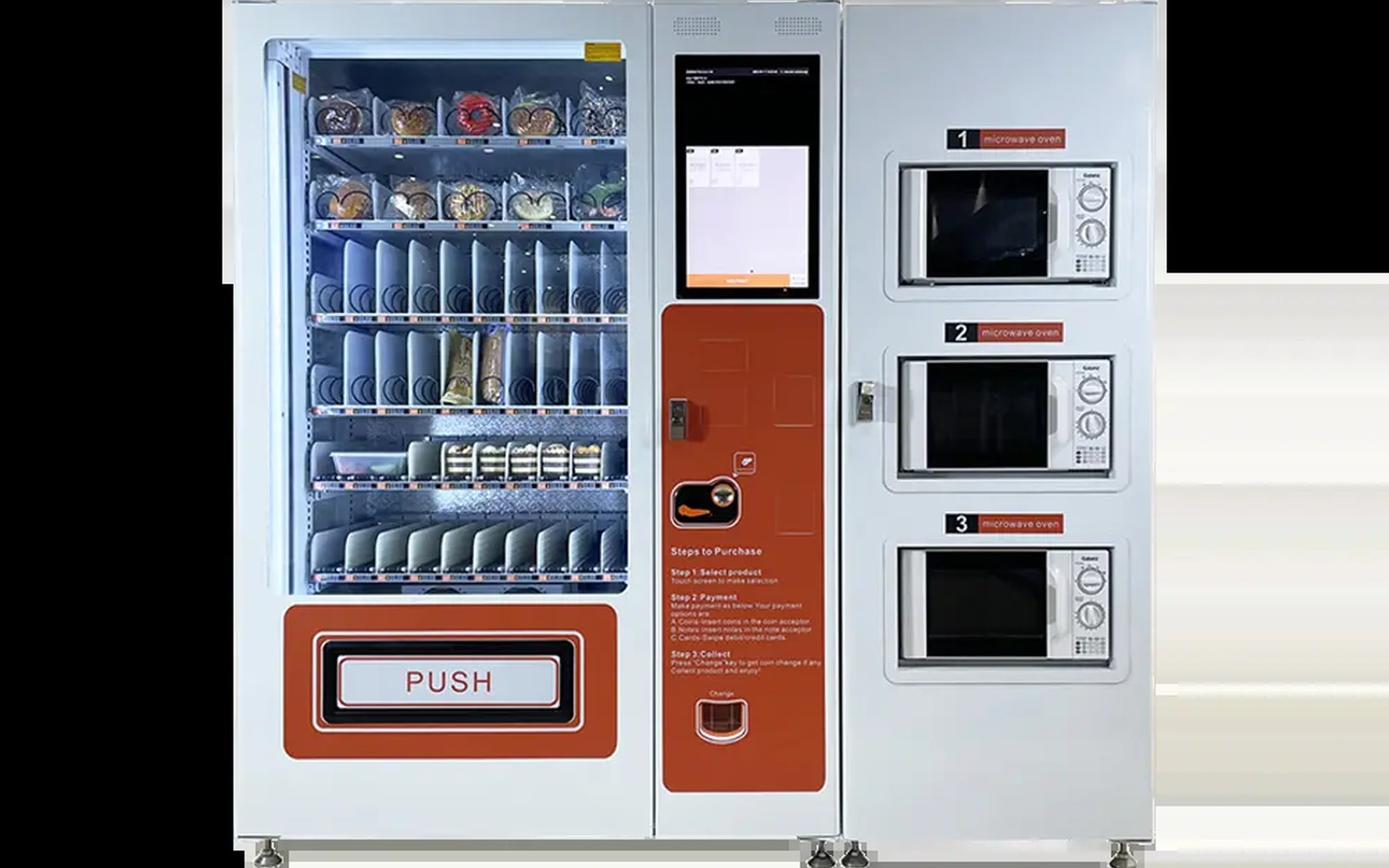
A hot food cabinet has to solve a problem a cold case never faces: keeping a finished meal at a safe serving temperature for hours without drying it out or letting it cool into a range where it should no longer be sold. Some units hold pre-cooked entrees in a heated compartment; others reheat a refrigerated or frozen item to order through a built-in oven or microwave module. Which approach a given machine uses changes both the power draw and the ventilation the site needs, and that detail belongs on the equipment quote before we price anything.
Most single hot food units land under our $50,000 program floor on their own, so stronger files usually combine several cabinets, a payment terminal upgrade, and delivery and installation labor into one request. An operator placing hot food alongside frozen food vending financing equipment at a shift-work site is financing a natural pairing, since the frozen cabinet holds inventory that the hot unit later reheats to order.
For hot food vending machine financing, financing starts at $50,000 and works comfortably from $100,000 up, covering new and used cabinets. For hot food vending machine financing, application-only paperwork can cover requests near $400,000 for stronger files, while larger rollouts typically move with three months of bank statements. For hot food vending machine financing, approval and pricing depend on the applicant, the seller, and the equipment, and neither is promised ahead of that review.
Heating method, humidity control, and hold time
The heating method is the single biggest variable in this category. A heated hold cabinet keeps already-cooked food warm on a rotating or stationary rack, and it depends on humidity control inside the compartment to keep food from drying out during a long hold period. A reheat-to-order unit instead stores product cold or frozen and only applies heat at the moment of purchase, using a microwave or convection element built into the vend cycle. We ask which type a seller is quoting, because the maintenance items, a humidity pan or heating element in one case, a magnetron or convection fan in the other, are different parts with different failure patterns.
Ventilation and electrical service follow from that choice. A cabinet with a built-in oven or convection element often needs a dedicated circuit and, depending on the site, an exhaust path for heat and moisture, similar to what a pizza vending machine requires. If the site needs electrical or venting work to support the unit, that cost belongs on the equipment quote as installation, not treated as a separate expense the buyer covers on the side.
New orders, used units, and reheat-cycle wear
Used hot food cabinets should come with some record of heating element or humidity system service, since those components see more continuous stress than a compressor that cycles on and off. A seller who can show a recent element replacement or a documented cleaning schedule for the humidity pan is offering a more comfortable file than one who cannot speak to either. We also ask about the rotating rack or delivery mechanism inside heated-hold units, since a jammed rack is a common complaint on older cabinets that have not been serviced regularly.
New equipment removes most of that condition question but often comes with a longer order lead time than an in-stock snack machine, particularly for units built to order with specific heating configurations. We size the financing timeline around that build schedule so payments do not begin while the unit is still weeks from delivery.
Timing funding around electrical work and delivery
For hot food vending machine financing, a single-unit purchase with a straightforward site, no electrical upgrade, and clean credit can often move on Application-Only Vending Financing with just the credit application and vendor quote. Add a panel upgrade or exhaust work, and we usually want three months of bank statements so the full project cost, not just the cabinet price, is reflected in the request. Buyers who need the payment schedule to start after installation rather than at signing should ask about Deferred-Payment Vending Financing early, since that structure has to be built into the file from the start rather than added after funding.
Most complete files fund in roughly one to two weeks once documents and the equipment schedule are settled, but we coordinate that against the manufacturer's build timeline and any contractor work at the site. If an electrician cannot get on site for three weeks, funding the full amount early just means payments start before the machine can vend anything.
Where hot food cabinets earn their payment
Manufacturing Plants running rotating shifts are a strong fit, since a hot meal option at two in the morning solves a real problem when the cafeteria is closed. Correctional Facilities represent a different but well-established placement, where institutional feeding schedules create steady, predictable demand that does not fluctuate with weather or season the way a retail account might. Logistics hubs with round-the-clock operations, including markets where overnight package sorting drives much of the local economy such as Vending Machine Financing in Louisville, KY, follow a similar pattern.
Route operators serving these accounts should expect underwriting to focus on shift schedules and existing contracts rather than general foot traffic, since a hot food cabinet in a 24-hour facility earns on a different clock than one in a retail lobby that closes at night.
Price your hot food cabinet purchase
Send the seller quote, the heating method the unit uses, any electrical or venting work the site needs, and the shift schedule or accounts it will serve. We will identify what the file needs and return financing sized to the actual project.
Vending equipment financing questions
Does a reheat-to-order unit need different financing treatment than a heated-hold cabinet?
The financing structure is the same. What differs is the equipment detail we ask for, since a reheat unit's oven or microwave module and a heated-hold cabinet's humidity system are different components with different service histories.
Can the electrical or venting work be included in the financed amount?
Yes, as long as it is itemized on the seller quote or a contractor equipment package tied to the same project. We would rather see that cost on the file from the start than have it appear as a surprise after closing.
Will a used cabinet with a jammed delivery rack still qualify?
It can, if the seller can confirm the rack has been repaired or if the buyer plans to have it serviced before the unit goes into service. We ask about that history because a rack jam is one of the more common issues on older heated-hold units.
Can hot food and frozen food cabinets be financed together for the same site?
Yes. That pairing is common, since one cabinet holds inventory cold or frozen while the other reheats it to order, and reviewing them together as one project reflects how they actually operate at the location.
How do you handle correctional facility or government contract placements?
We review the contract terms and payment source the same way we would any institutional account, with attention to contract length and renewal history, since those placements often run on multi-year agreements rather than month-to-month arrangements.