Frozen Food Vending Machine Financing
A frozen food cabinet is judged less by what it can hold and more by how reliably it can hold zero degrees through years of door openings, warehouse power blips, and a defrost cycle that has to clear ice without ever letting the load underneath climb into a temperature it should not reach. That mechanical reality, more than the branding on the cabinet, is what we look at first when a frozen food purchase comes across the desk.
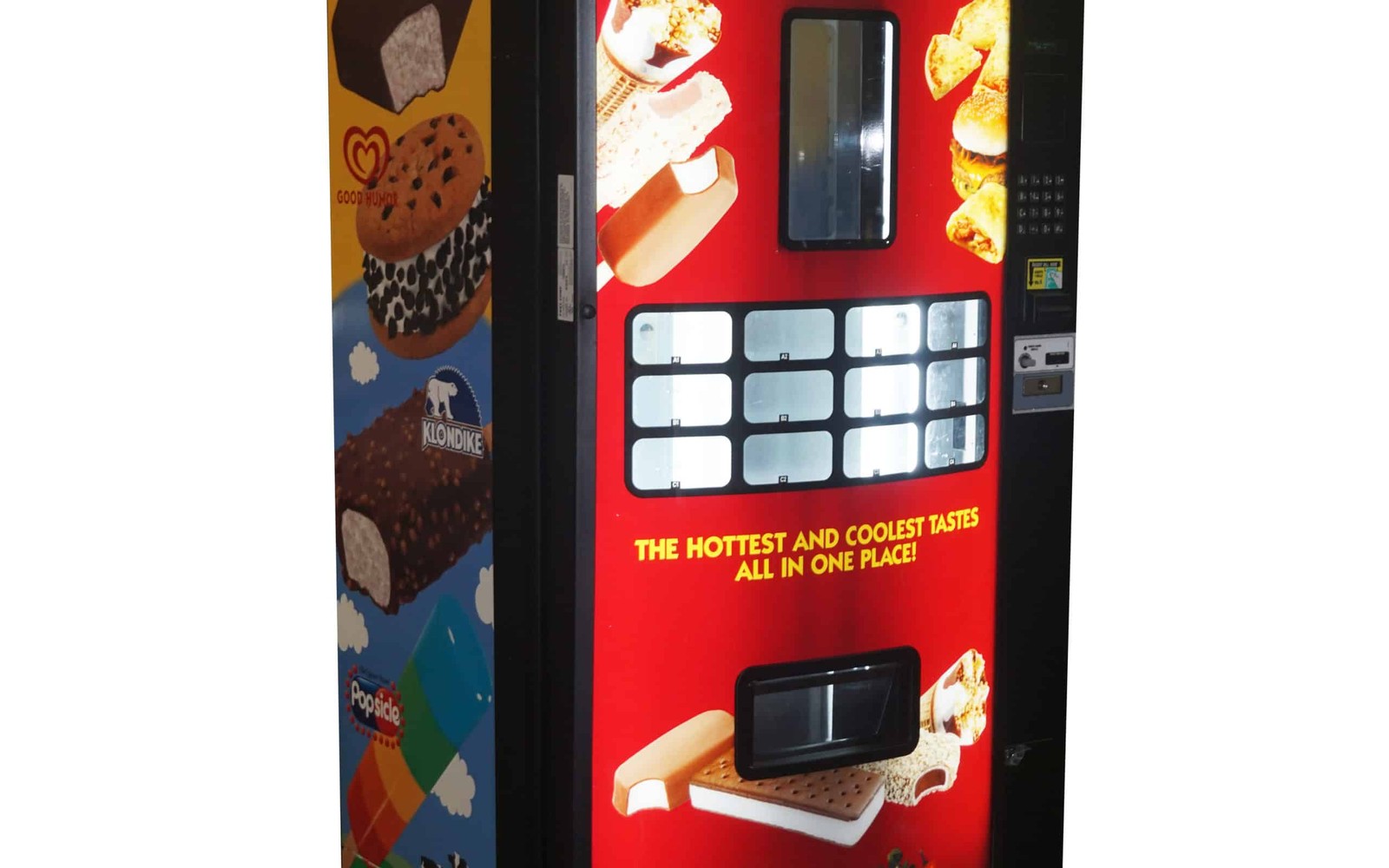
Most single frozen food units land under our $50,000 program floor, so the stronger files bundle several cabinets, a payment reader upgrade, and the initial delivery and installation labor into one request. An operator adding frozen entrees to a route already running hot food vending machine financing equipment at the same site is financing a complementary pairing, since one cabinet reheats what the other keeps frozen until a shift break calls for it.
Financing starts at $50,000 and works comfortably from $100,000 up, covering new and used cabinets. For frozen food vending machine financing, application-only paperwork can cover requests near $400,000 for stronger files, while larger rollouts typically move with three months of bank statements. Approval and pricing depend on the applicant, the seller, and the equipment itself, and neither is promised ahead of that review.
Defrost cycles, evaporator coils, and glass frost
A frozen cabinet runs its compressor far colder and longer than a refrigerated case, and the automatic defrost cycle that clears frost off the evaporator coil is the part most likely to fail quietly. A unit that skips or mistimes its defrost builds ice on the coil until airflow drops and the cabinet can no longer hold temperature, even though the compressor is still running. We ask sellers whether the defrost timer or sensor has been serviced and whether the unit has a history of ice buildup complaints.
Glass doors on a frozen cabinet fog and frost more than a refrigerated one, especially in humid climates, and a door heater strip along the frame is standard equipment for keeping the glass clear rather than a luxury add-on. We ask whether that heater strip is functioning, since a fogged door hides the merchandise and hurts sales as much as a mechanical failure would. Cabinets pairing a spiral delivery system with frozen entrees and pizza rounds need that mechanism inspected too, because ice crystals can build up on the coils and cause jams that a warm-food spiral never encounters.
Documents that keep a frozen food file moving
Send the itemized seller quote first: cabinet count, per-unit price, any door-heater or defrost-sensor upgrades, freight, and installation, broken out rather than bundled into a single number. If the cabinets are replacing an existing bank of units at the same locations, a route or account list showing where each cabinet currently sits helps us treat the file as a fleet replacement, similar to a Vending Machine Fleet Financing request, rather than a speculative new placement.
Smaller, single-cabinet purchases with clean credit can sometimes move on Application-Only Vending Financing with just a credit application and the vendor quote. Larger or mixed new-and-used purchases, or files where credit has some recent issues, usually need three months of business bank statements and a debt schedule. Bad Credit Vending Financing review considers those files rather than declining automatically, though a stronger down payment or shorter term may be part of the resulting structure.
Where frozen food cabinets earn back the purchase
Overnight and weekend shifts are the natural fit, since a frozen entree or burrito someone can heat in a break room microwave solves a real problem when the cafeteria is closed. Warehouses and Distribution Centers running around-the-clock fulfillment shifts are some of the steadiest placements we see, because the demand for a hot meal at two in the morning does not change with the season. Manufacturing Plants with rotating shift schedules follow closely behind, particularly plants where the on-site cafeteria only staffs daytime hours.
Dormitories and student housing are a second common placement, though the demand pattern there follows the academic calendar rather than a work shift schedule. Route operators serving dormitory accounts in colder markets such as Vending Machine Financing in Minneapolis, MN should still expect the academic calendar, not the outdoor temperature, to drive placement demand, with sharp drops during breaks that a route operator should plan cash flow around.
Timing delivery around defrost and refrigerant service
Frozen cabinets, unlike ambient snack machines, sometimes need a technician on site to check refrigerant charge and defrost timer settings before the unit is considered ready to stock, particularly for used equipment moving between climates. We want that service step identified early, because funding that closes before a cabinet is actually certified to hold temperature creates a gap between when payments start and when the unit can be trusted with perishable inventory.
Most complete files fund in roughly one to two weeks once the equipment schedule and business documents are settled. Facility requirements can extend that slightly: some hospitals and campuses require a certificate of insurance or vendor background review before install day, and building that step into the timeline up front avoids a mismatch between delivery day and funding day.
Price your frozen food cabinet purchase
Send the seller quote, cabinet count, any refrigerant or defrost service needed before install, and the accounts or shifts the units will serve. We will identify what the file needs and return financing sized to the actual equipment.
Vending equipment financing questions
Can a used frozen cabinet from a closed route qualify?
Yes, with some documentation. We ask for service history on the compressor and defrost system, and whether the unit has any history of ice buildup or door-seal complaints, since those issues are more common on frozen equipment than on refrigerated cases.
Does financing cover a defrost-sensor or door-heater repair needed before install?
It can, as long as the repair is itemized on the seller quote or a separate service equipment package tied to the same purchase. We would rather see that cost on the file upfront than have it surface after the cabinet is already delivered.
How does seasonal demand at a dormitory placement affect the file?
We factor in the academic calendar when reviewing utilization, since demand at a student housing account typically drops during breaks. A route that also serves a manufacturing or warehouse account tends to smooth that pattern out over the full year.
Can frozen and hot food cabinets be financed together as one package?
Yes. Pairing a frozen cabinet with a reheat unit at the same site is a common combination, and we review the full package together since the two machines are meant to work as a set at that location.