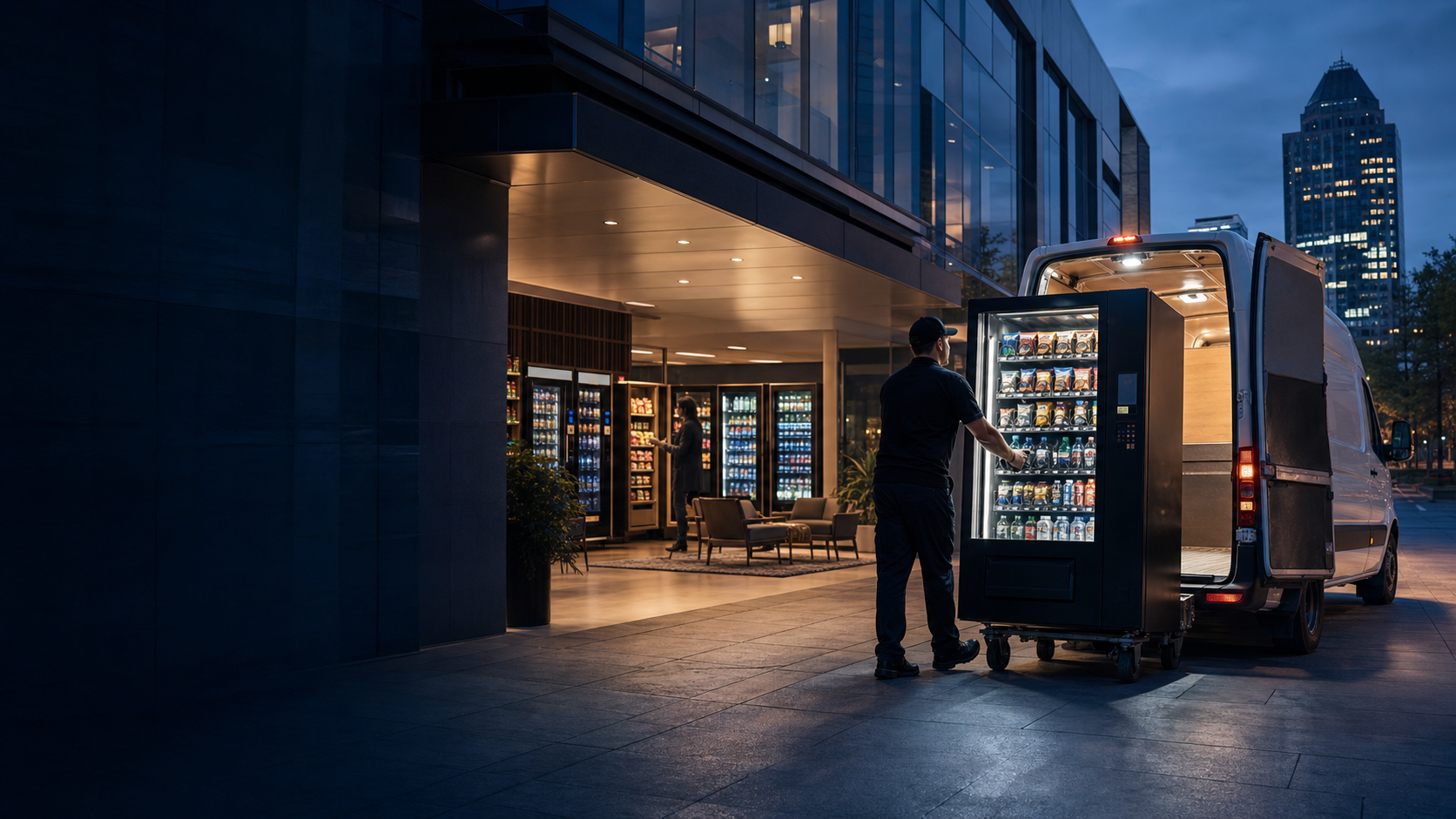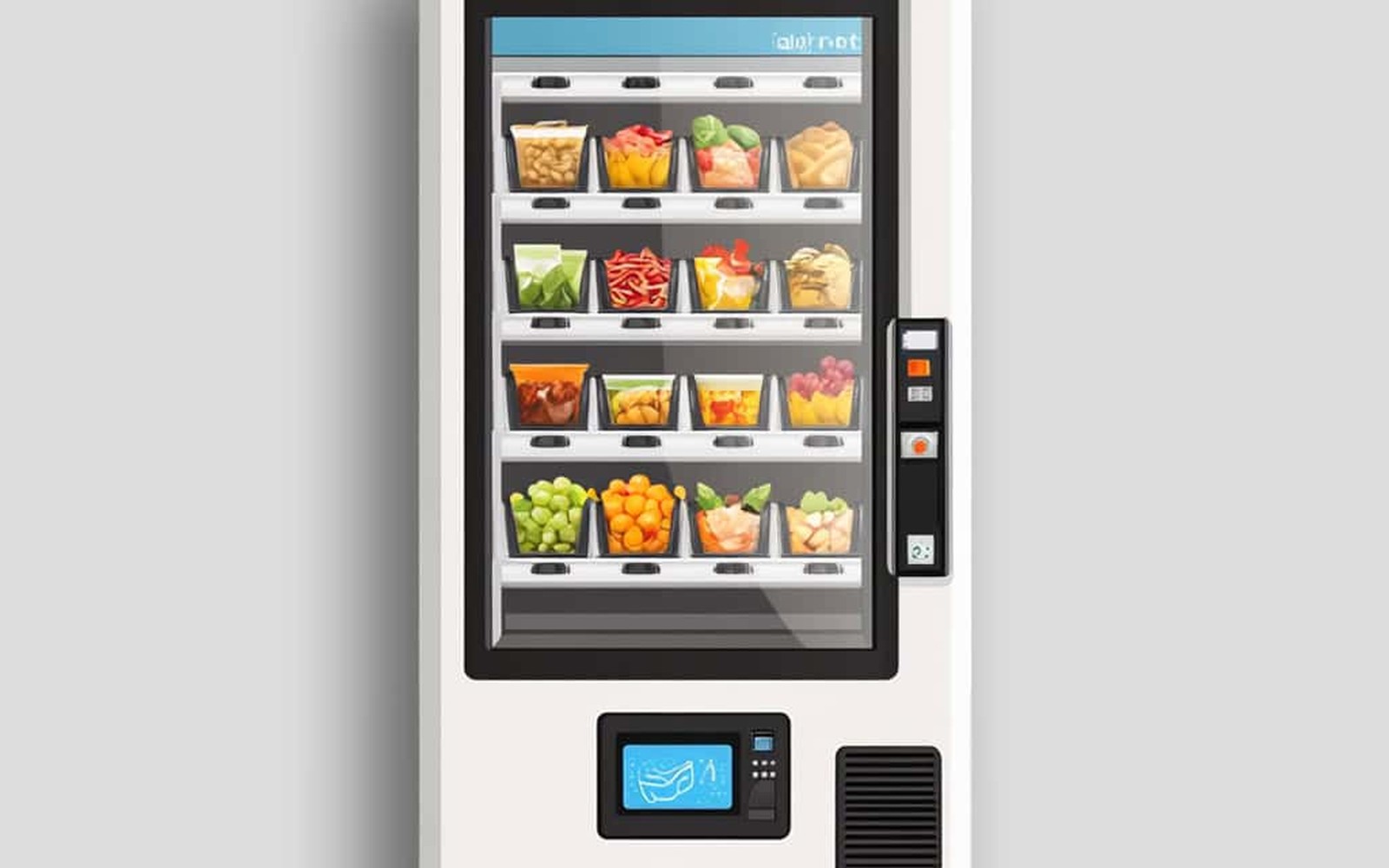
Healthy Vending Machine Financing
A gym, school, or hospital that wants to add vending without contradicting its own wellness messaging is not shopping for the same equipment as a factory break room. The planogram matters as much as the cabinet: low-sugar snacks, protein items, gluten-free packaged goods, and sometimes a small refrigerated section for fresh produce or yogurt all have to be sourced from suppliers who specialize in that category, and that supplier relationship is part of what we look at before pricing the equipment.
Most requests we see pair several cabinets, a cashless payment upgrade, and the initial stocking order into one package, since a single healthy vending cabinet on its own often sits below our $50,000 program floor. A wellness-focused rollout across a corporate campus or a multi-building hospital system is a stronger file than a single machine, because the account list demonstrates where the demand actually comes from.
For healthy vending machine financing, financing starts at $50,000 and works comfortably from $100,000 up, covering new and used cabinets. For healthy vending machine financing, application-only paperwork can cover requests near $400,000 for stronger files, while larger rollouts typically move with three months of bank statements. For healthy vending machine financing, approval and pricing depend on the applicant, the seller, and the equipment, and neither is promised ahead of that review.
What has to be true before a healthy vending package qualifies
The first thing we ask about is the supplier behind the planogram. Health-focused snack distribution is a narrower market than general vending supply, and an operator who already has accounts set up with those distributors has solved a real operating problem that a first-time buyer has not. We want to see that supply relationship named, not assumed, before pricing a rollout built on better-for-you selections.
Second, we look at the payment hardware, because this customer base skews heavily toward cashless transactions. A cabinet with a modern reader from a provider such as Cantaloupe Vending Technology Financing supports that behavior directly, while a coin-and-bill-only unit is likely to underperform in a gym or corporate lobby regardless of how good the product selection is. If the equipment includes a refrigerated section for produce or dairy, that section is evaluated the same way we would review a fresh food fridge purchase, with attention to compressor condition and door seal integrity.
Where healthy vending actually earns its keep
Gyms and Fitness Centers are the most obvious placement, and membership traffic there tends to be steady enough to support the category on its own. Schools and Universities are a different, and in some ways more demanding, placement, because public schools receiving federal meal funding operate under USDA Smart Snacks nutritional standards that limit what can be sold in a campus vending machine. An operator serving that account needs a planogram that actually meets those standards, not just a marketing claim that the machine is healthy.
Corporate wellness programs are the third common driver, where an employer wants a break room option that matches its own health benefits messaging. A healthy vending line in that setting often sits next to a glass-front beverage machine stocked with water and unsweetened tea, and pricing the two together as one wellness-focused package is common. Those accounts tend to be smaller in unit count but longer in contract term than a typical gym placement, which changes the utilization math we run on the file.
Financing this alongside a wider route or a first launch
An established operator adding a healthy line to an existing route is a different file than a first-time buyer entering the category from scratch. The established operator's request often fits under Multi-Location Vending Rollout Financing terms, since several accounts are going live close together on a shared timeline. A first-time buyer, by contrast, usually moves through Startup Vending Business Financing review, with closer attention paid to personal credit, available cash after closing, and whatever location commitments already exist before the machines are ordered.
Buyers debating whether to add a full refrigerated section now or phase it in later should treat that as a sequencing question rather than an all-or-nothing decision. A dry-goods-only launch that proves demand before adding refrigerated cases is a reasonable path, and it keeps the initial financed package smaller and easier to size correctly.
How pricing works on a healthy vending package
Healthy vending cabinets and their better-for-you inventory typically run at a higher price point per selection than a standard snack machine, and the equipment itself is not usually more expensive on that basis alone. What changes the request size is the payment hardware and, where present, the refrigerated section, both of which add real cost to the quote. We ask sellers to separate cabinet price, payment reader cost, and any refrigeration upgrade so the collateral schedule reflects what is actually being financed rather than one bundled figure.
New and used equipment both qualify, and credit outside the top tier is reviewed rather than declined automatically. A stronger down payment, a shorter term, or additional documentation may be part of the structure for a thinner file, but that is a starting point for a conversation, not an automatic disqualifier.
Price your healthy vending package
Send the cabinet quote, unit count, payment hardware, and the accounts or wellness program the machines will serve. We will identify what documentation the file needs and price the request against the actual package.
Vending equipment financing questions
Does the vending equipment need to meet a specific nutrition standard to be financed?
No, we finance the equipment regardless of the specific planogram. A school account receiving federal meal funding, however, does need its selections to meet USDA Smart Snacks standards, and we ask about that compliance so the file reflects the actual account requirements.
Can a refrigerated produce case be added to an existing healthy vending route later?
Yes. Many operators start with a dry-goods planogram and add refrigerated cases once a location proves demand. That later purchase is reviewed on its own, using the same compressor and door-seal criteria we apply to any refrigerated vending equipment.
Will a cashless-only cabinet be treated differently than a coin-and-bill unit?
The financing treatment is the same either way. We do ask the quote to separate the payment reader cost from the cabinet price, since that hardware is a meaningful part of the total request in this category.
Can I finance machines for a school account and a corporate account under one request?
Yes, as long as the equipment schedule identifies which units go where. Combining accounts under one request is common and can make a stronger file than financing each location separately.
What if my supplier relationship for health-focused snacks is new?
Send it anyway. A new supplier relationship is not disqualifying, though we may ask more questions about pricing and delivery reliability than we would for an operator with an established distributor already in place.
Are startups welcome in this category?
Yes. Startup files are reviewed on the strength of the plan, including location commitments and relevant experience, rather than declined by default. A larger down payment is sometimes part of the structure for a first-time buyer.