Fresh Food Fridge Financing
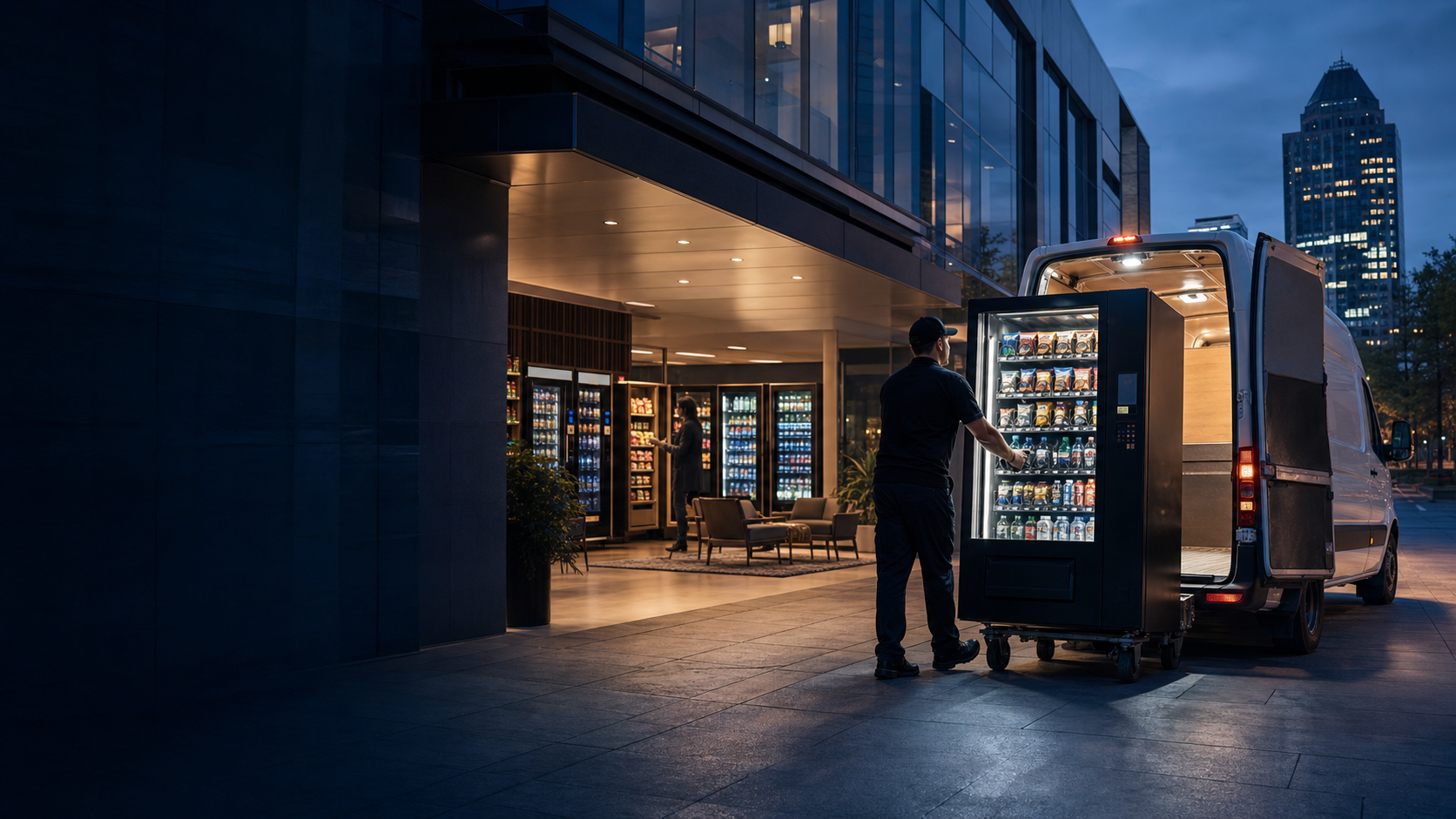
A refrigerated case of sandwiches, salads, and dairy cups only earns money while the product inside it is still safe to sell, and that shelf-life clock changes how we look at the financing request compared to a dry snack cabinet. The cooler, the compressor, the door seal, the payment terminal, and the commissary or kitchen partner who keeps it stocked all have to line up before the first payment comes due, because a financed cabinet sitting empty or half-stocked is not earning anything toward its own cost.
We see this request from route operators adding a cold case to an existing snack account, break room suppliers opening a full food program for the first time, and hospitals or campuses replacing a bank of aging reach-ins with connected coolers. What ties those files together is not the cabinet brand. It is whether the finished package, once installed and stocked on schedule, produces enough vend activity to carry the payment on time.
Financing starts at $50,000 and works most comfortably from around $100,000 up, covering both new and used cabinets. Application-only review can be available near $400,000 for stronger files, while larger or mixed-equipment requests typically move with three months of business bank statements. Approval and pricing depend on the applicant, the equipment, and the seller, and neither is promised before that review happens.
What has to be true before a fresh food cabinet qualifies
A single reach-in case usually sits well under our program minimum on its own, so most requests that clear underwriting combine several cases, a compressor or door upgrade, and supporting route equipment such as a smart cooler footprint into one package. We ask for the itemized seller quote, unit count, and whatever accessories or telemetry hardware come with the purchase, because a bundled lump-sum equipment package makes it harder to separate collateral from installation labor or software fees.
Second, we want to know how the machines will actually be kept stocked, not just where they will sit. A route with a signed commissary agreement, an existing supplier relationship, or a documented delivery schedule answers that question directly. A buyer who can name the cabinets and the locations but not the kitchen or supplier behind them faces a harder file than one with the whole supply chain already arranged.
Compressor condition, delivery mechanism, and door seal
Refrigerated merchandisers hold product in a narrow temperature band, so the thermostat and any telemetry alarm matter more here than on ambient equipment. A cabinet that sends an alert when the compartment drifts warm overnight is worth more, and worth noting on the file, than one that depends on a driver noticing spoiled product on the next stocking visit. We also ask how product leaves the case: a spiral or elevator delivery mechanism protects a sandwich or salad container far better than a simple push-button drop, and a stuck elevator motor is a common reason a used cabinet needs repair before it can go back into service.
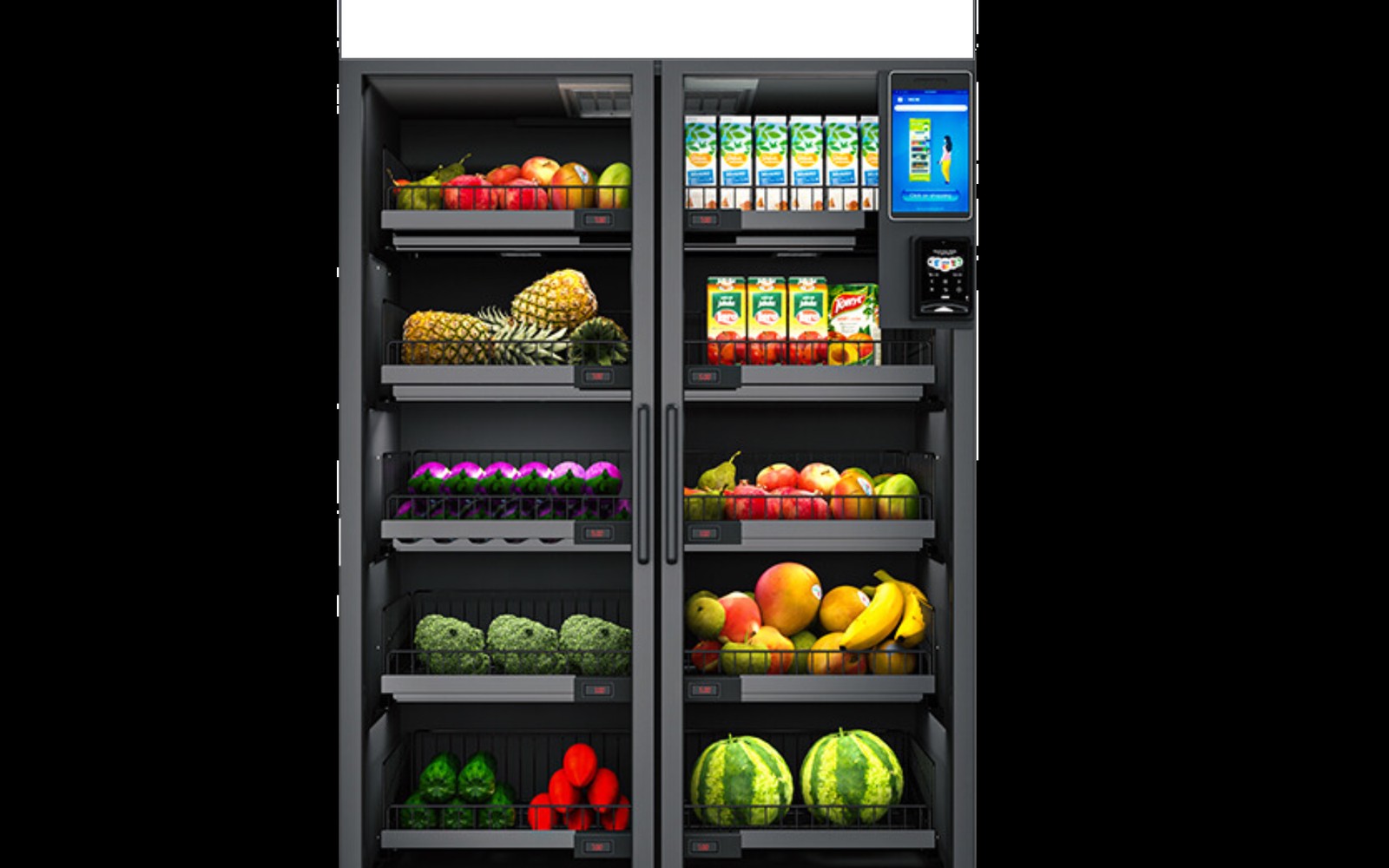
Glass door seals wear from constant opening and closing, and frost around the frame is a sign of cold air escaping that the compressor then has to work harder to replace. We also ask about compressor placement and clearance, since these units run nearly continuously and need a vented compartment, not always available in a tight break room corner. A connected cooler such as Byte Smart Fridge Financing equipment, with weight-sensor shelves and app-based checkout, carries a different mix of hardware and software costs than a plain locking reach-in, and the quote should separate those line items clearly.
Used cases, refurbished units, and inherited coolers
Used refrigerated cases carry more compressor risk than a used snack cabinet, simply because the compressor never really stops running. We ask for service records, the age of the last compressor or evaporator repair, and whatever photos the seller can provide of the coil and gasket condition. A refurbished case from a dealer with a documented compressor swap and a recent cleaning is a more comfortable file than the same model bought privately with no history at all, even at a similar price.
New equipment removes most of that condition question but adds its own paperwork. Section 179 and bonus depreciation treatment can matter to a buyer's accountant when weighing a purchase against a lease, and that conversation belongs with Section 179 Vending Equipment Financing rather than a guess made mid-application. Straightforward new-equipment purchases under roughly $400,000 are also where Application-Only Vending Financing tends to move fastest, since the file leans on the vendor quote rather than a stack of financial statements.
Where a fresh food cabinet actually earns its payment
Fresh food fridges do best where a facility's own food service has a gap. Hospitals and Healthcare Facilities running around-the-clock shifts, manufacturing floors where the cafeteria closes before second shift ends, and university residence halls after dining hours are common placements because the demand exists whether or not a cafeteria is open. Corporate campuses upgrading from snack-only vending to a real food option often treat the fresh case as the anchor of a broader break room refresh, sometimes alongside a healthy snack program running in the same room.
Location matters for a different reason. A fresh food account in a market like Vending Machine Financing in Denver, CO needs a commissary or supplier within practical delivery range, since a cabinet that cannot be restocked several times a week loses the freshness advantage that justifies its price. We ask where product comes from before pricing the equipment, because a strong route with no nearby fresh food supplier is a weaker file than the numbers alone suggest.
Price your fresh food cabinet purchase
Send the cabinet quote, the unit count, the commissary or supplier arrangement, and your target install date. We will identify what documentation the file needs and price the request against the actual equipment rather than a generic estimate.
Vending equipment financing questions
Can the fridge be financed separately from the commissary or kitchen agreement?
Yes. We finance the cabinet, its payment hardware, and related route equipment. The supply agreement with a kitchen or food distributor is a business relationship we ask about for context, since it affects how reliably the cabinet gets restocked, but it is not a document we underwrite directly.
Does a smart fridge with weight sensors get treated differently than a plain glass-door cooler?
The refrigeration hardware is financed the same way. The difference shows up in the quote, which should separate the cabinet cost from any software subscription or data service fee, since recurring technology charges are generally not part of the financed equipment cost.
What happens if the compressor fails during the loan term?
The equipment stays the borrower's responsibility to maintain and repair, the same as any financed asset. A warranty, a service contract, or a maintenance reserve is worth arranging with the seller before purchase, particularly on a used case with an older compressor.
Can a used refrigerated case that came out of another operator's route qualify?
Often, yes. We look for a bill of sale, seller identification, and whatever service or condition history exists. A case with a documented compressor repair history is typically an easier file than one with no paper trail at all.
How fast can a hospital or campus rollout fund once the vendor quote is ready?
Most complete files fund in roughly one to two weeks. Facility steps such as insurance certificates or vendor background review can run alongside financing, but flagging that requirement early keeps install day and funding day on the same calendar.