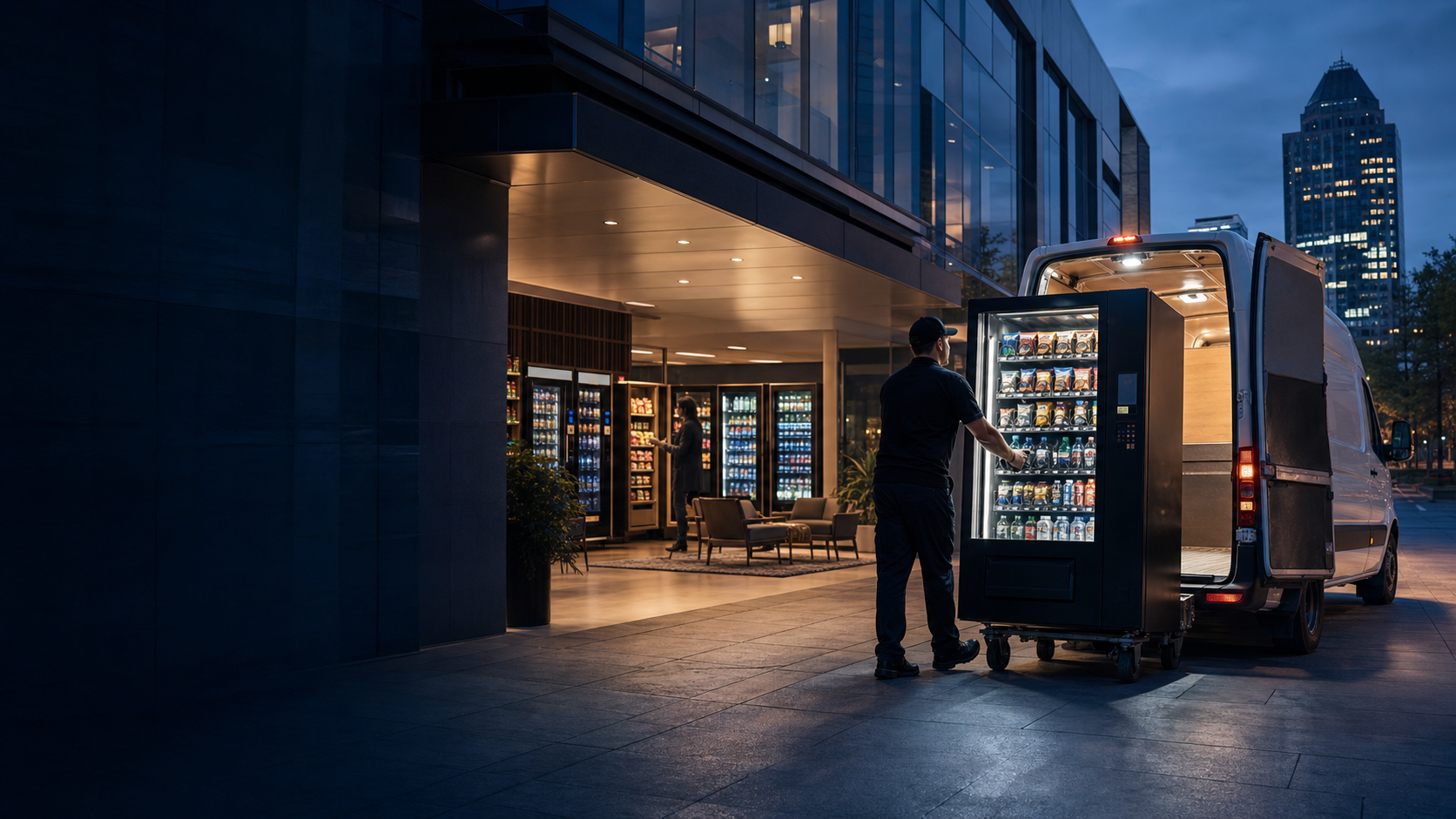
Bean-to-Cup Vending Machine Financing
A bean-to-cup unit gets judged by the cup it pours, not by the line item on a vendor quote. Grinder burrs, brew group, boiler or thermoblock, water filtration, and (on units with a fresh milk option) a refrigerated milk module all have to work together on every pour, and each of those parts ages at a different rate. We look at the whole assembly before we look at the price, because a machine that jams the grinder twice a week or scales up the boiler in hard-water territory is not a $6,000 problem, it is a service-call problem that eats the margin the placement was supposed to produce.
Single bean-to-cup units commonly price well under our $50,000 program minimum, so most funded files combine several machines, a milk chiller add-on, plumbing and electrical hookup, and sometimes a payment upgrade into one package. An operator replacing an aging fleet of Coffee Vending Machine Financing units with grind-fresh equipment, or adding bean-to-cup stations alongside Glass-Front Beverage Machine Financing in the same breakroom rollout, can usually clear the minimum with a modest multi-unit order.
Our program starts at $50,000 and commonly serves transactions from $100,000 upward. New and refurbished equipment can both qualify. Application-only review may be available near $400,000 for stronger files, while larger or more complex requests generally need bank statements and additional business documentation. Approval is never guaranteed, but a complete package with a clear equipment list moves faster than a vague one.
What actually gets inspected on a bean-to-cup order
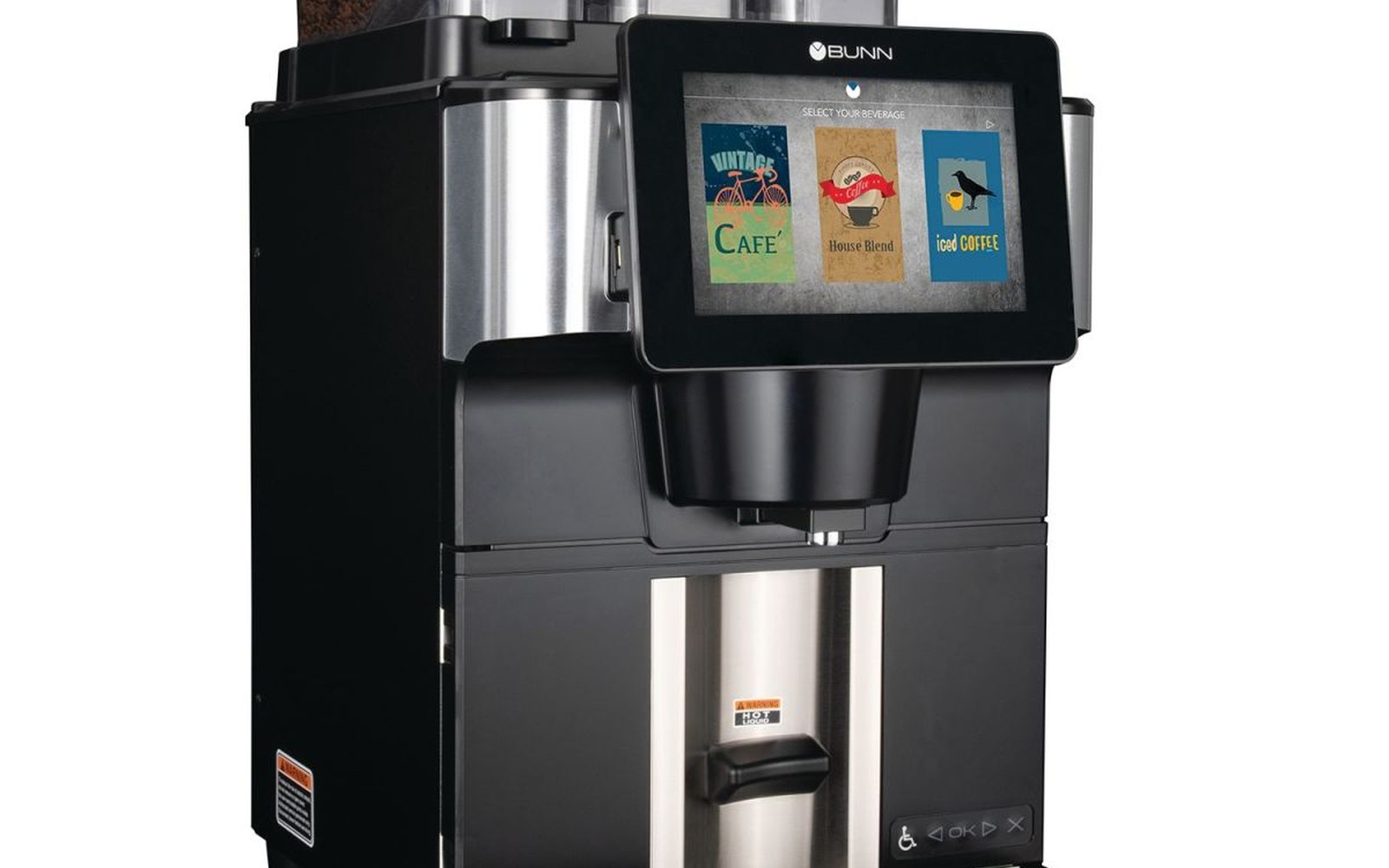
We start with the grinder and brew group, since those two parts determine cup quality and service frequency more than any spec sheet. Burr wear, hopper capacity, and whether the grinder handles oily dark-roast beans without clogging all matter for a route that will run the machine hundreds of times a day. The brew group itself, the part that compresses grounds into a puck and pushes hot water through it, needs to be checked for scale buildup and gasket condition, especially on machines that have run without a water softener.
Heating is next. A thermoblock heats water on demand and tends to be simpler to service; a boiler holds a reserve of hot water and can support faster back-to-back pours but has more to go wrong if it scales. Water source matters here too: a machine plumbed to a building line depends on filtration cartridge condition, while a bottled-reservoir unit depends on someone actually refilling it on schedule. If the configuration includes a refrigerated milk module for fresh milk rather than powdered creamer, we ask about the compressor's service history and how the operator handles the daily line cleaning that fresh milk requires.
Brand and model history help us size remaining useful life. A route running Necta Vending Financing equipment, including something like the Necta Kalea Plus Financing configuration, has service and parts availability we can reference against age and usage. A dealer-refurbished unit with a documented rebuild is often a stronger file than a new unit purchased on a bundled quote that does not separate hardware from installation and subscription costs.
New machines against refurbished bean-to-cup units
Grinders and brew groups wear on a use cycle, not a calendar, so a heavily placed used machine can be closer to end of life than its age suggests, while a lightly used unit from a low-traffic office can still have most of its service life left. We ask for cup counts or usage estimates when they exist, and we weigh dealer refurbishment records heavily, because a documented rebuild of the brew group and replacement of wear seals tells us more than a simple age figure.
Plumbing, electrical hookup, and milk-module installation cost roughly the same whether the machine itself is new or refurbished, so the savings on a used purchase land almost entirely on hardware price, not on the deployment cost that often drives the total request. That changes how we think about down payment and term: a shorter term can make sense on an older refurbished unit even when the monthly payment is close to what a new machine would carry.
Warranty coverage is the other real difference. New equipment usually carries a manufacturer or distributor warranty that covers the grinder and brew group for a defined period, while a refurbished purchase depends on what the reconditioning dealer stands behind. An Application-Only Vending Financing request can move quickly on either path once the equipment list, seller, and delivery date are clear, but we still want the warranty terms in writing before funding a used purchase without one.
Turning a coffee-service quote into a funded file
The vendor quote should separate hardware price from installation labor, plumbing and electrical work, any milk chiller add-on, and any ongoing telemetry or payment subscription. Bundled numbers slow us down because we cannot tell what is collateral and what is a recurring service fee. A schedule that lists each machine by model, serial number where available, and delivery site lets us move straight to underwriting instead of going back for clarification.
Documentation scales with the size of the request. Smaller, straightforward orders can move on a credit application and the vendor quote alone. Larger requests, or files supporting a hospitality or healthcare placement with facilities-department approval requirements, generally need three months of business bank statements and a debt schedule. Bad or thin credit is considered case by case, and a business placing machines into Hotels and Hospitality accounts with a signed service agreement has a stronger story than one financing speculative inventory.
Most complete files fund in roughly one to two weeks. The pace depends on how quickly plumbing and electrical work can be scheduled at the install site, since we would rather confirm a realistic delivery date up front than have payments start before the machines are actually pouring coffee.
Where bean-to-cup placement earns its keep
Bean-to-cup machines tend to land where the price per cup can be higher than a canister-based hot drink machine supports: corporate breakrooms upgrading from instant coffee, hospital and clinic waiting areas, hotel lobbies running a self-serve station between shifts, and car dealership service lounges. The common thread is a captive audience with some tolerance for a higher price point in exchange for a fresher cup.
Water hardness is a real regional variable that affects service cost. A machine running on the harder water common in parts of the Mountain West needs more frequent filtration cartridge changes and descale cycles than one running on naturally softer water, and an operator adding stations in Vending Machine Financing in Denver, CO should budget service visits accordingly rather than assuming a uniform maintenance schedule across every metro.
Operators frequently pair bean-to-cup stations with a cold beverage option in the same location, since a single hot-drink-only placement leaves revenue on the table in a breakroom that also wants soda or water. That is one reason files combining bean-to-cup equipment with Glass-Front Beverage Machine Financing in the same order are common, and it is also why we ask about the full placement plan rather than reviewing one machine type in isolation.
Price the complete bean-to-cup route package
Send the vendor quote with hardware, plumbing, milk module, and any subscription costs itemized, along with the placement sites and target install date. We will identify what documentation the file needs and return a financing path based on the actual equipment and deployment plan.
Vending equipment financing questions
Can a refurbished bean-to-cup machine qualify the same as a new one?
Yes. We look at documented rebuild history, warranty coverage from the reconditioning dealer, and usage estimates rather than treating used equipment as automatically weaker collateral. A well-documented refurbished unit can qualify on similar terms to new equipment.
Does the milk refrigeration module get financed with the machine?
It can, as long as the quote lists it as a distinct line item. We treat the chiller module, the base machine, and any plumbing or electrical installation as parts of one package rather than requiring separate applications.
What if the machines are going into a hospital or hotel account that requires facilities approval?
Send us the signed service or placement agreement if one exists. A documented account with an approved installation timeline supports the file and helps us align funding with the date the site is actually ready for delivery.
Can several bean-to-cup units below the program minimum be financed together?
Yes, that is the most common way this equipment gets financed. A schedule listing each unit, its destination, and its price lets us treat multiple sub-minimum machines as one qualifying package.
How does water hardness affect the financing conversation?
It does not change approval, but it is worth mentioning if you are budgeting service costs. Harder water regions typically need more frequent filtration cartridge changes and descaling, which affects total cost of ownership more than the financing terms themselves.